Wednesday, 2 August 2017

Muckross Lake, Killarney National Park


Despite tourists being visible in all directions, I somehow managed to get a sense of solitude alongside Muckross Lake (also known as Middle Lake or The Torc) in Killarney National Park:


Have just read that this is Ireland's deepest lake, and is said to be good for salmon and brown trout fishing.  Moreover, it allegedly contains a 20-foot long, eel-type monster.

Thomas Hardy's Wessex: Melbury House


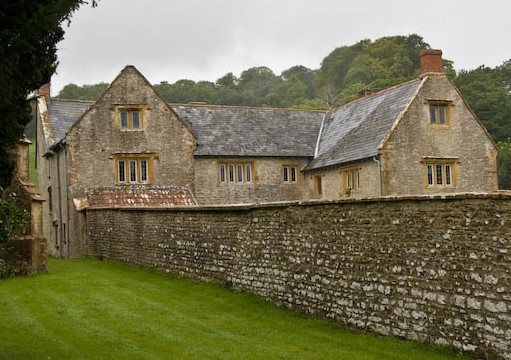
In contrast to the previous day's outward journey, I had no problems passing through Melbury Park (taking in Melbury House above) on my early morning, return walk from Melbury Osmond to Evershot.

Margaret Marande ('The Hardy Way' page 120) explains that Mrs Charmond's house in 'The Woodlanders' is not modelled on Melbury House, although Hardy did make use of "its situation in the park and surrounding woodland" as a locale for the novel.  Moreover, Marande adds that Melbury House is the model for King's Hintock Court in the first story of 'A Group of Noble Dames'  which, as it happens, I'm currently reading.

Have just read that St. Mary's chapel below, which was always going to catch my eye, contains tombs of beautiful stone heraldry and an incredible altarpiece (just wish I'd been able to have a look inside, but it was 6.30 in the morning).


Still, I got a quick look at Melbury House both from the side:


And round the back where it really did look impressive:


And finally, after passing deer in the distance in the country park, I arrived at the Lion Gate, relieved to know that I'd safely negotiated my way to Evershot for my early morning bus back to Dorchester:


Doolin: Looking Out Towards the Cliffs


Having returned from Inishmore to Doolin, I just found myself looking out towards the Cliffs in the distance:


Tuesday, 1 August 2017

St. Goarshausen: Heading towards Loreley


Here, we were taking in a few sights, strolling alongside the river Rhine towards Loreley.  Below, we caught sight of a tourist ferry boat:


The turning left below offered a long, winding road to the Loreley 'Night of the Prog' festival:


On the second day of the festival, we were daft enough to try walking this way to the festival site, but, fortunately, when halfway there, a kind group of Germans stopped and gave us a lift in their car.

Thomas Hardy's Wessex: Melbury Osmond


Once again, in Melbury Osmond, Hardy's model for 'Great Hintock' (some would say 'Little Hintock') in 'The Woodlanders', I found myself focused on a village church:


However, it was fitting that I focused on the church of St. Osmund as it may be viewed as "the setting for the last scene in 'The Woodlanders' where Marty South is a solitary loyal figure at Giles Winterbourne's grave" (Margaret Marande, 'The Hardy Way' page 120).

The grave below from St. Osmund's is how I imagine Giles Winterbourne's grave must've looked like in Hardy's eye:


Have just read about Hardy's grandmother, Elizabeth Swetman getting married to George Hand in this church, and from this marriage, the fifth of the seven children, Jemima, being destined to become the mother of Thomas Hardy.

Have also just read that Jemima Hardy was baptised and married here, with her marriage certificate being visible on a wall inside the church ('The Hardy Way' page 119).  Unfortunately, I arrived in Melbury Osmond just before sundown and the church was already locked up, so I didn't get to see Jemima Hardy's marriage certificate.


Despite taking note of the church of St. Osmund,  I missed out on a lot of other things of Hardy significance in Melbury Osmond.


For example, I probably passed without noticing 1, Barton Hill Cottages where Jemima Hardy was born and spent her childhood; passed Monmouth Cottage without realising it was once the home of Hardy's maternal ancestors and the model setting for 'The Duke's Reappearance' in Hardy's 'A Changed Man' short story collection (which I've just finished reading); and passed Manor Cottage without registering that this was the model setting for Sally Hall and her mother's house in Hardy's 'Interlopers at the Knap' stort story from the 'Wessex Tales' anthology.

Still, the Old Post House did manage to strongly catch my eye:


As did the dairy building below on the outskirts of the village:


One funny last point, I ended up camping on the large village green (near the village hall) at Melbury Osmond for a night, pitching my tent behind a tree in the top right corner of the green as it started  getting dark, and then waking up and pulling the tent down at first light, so as to not cause any alarm to the locals.

Thomas Hardy's Wessex: Heading towards Melbury Osmond


Having retraced my steps from Melbury Bubb through passing Stockwood, turning right at the A37, and, after some time, crossing over the A37, I was heading down a lane towards Melbury Osmond.

Think that the shot above sets the scene of me being about to enter another magical, remote, Hardy place.

Thomas Hardy's Wessex: Melbury Bubb


Had to visit Melbury Bubb as it is often viewed as the village model for 'Little Hintock' in Hardy's 'The Woodlanders'.

As is often the case, I found myself focused on a village church in a remote 'Hardy place':


The most significant thing inside the church of St. Mary the Virgin is probably the 10th/11th century, Anglo-Saxon baptismal font below:


The old carving on the outside of the church below made me think of a common thematic thread in Hardy:  aristocratic family lines that become forgotten, almost as if they never existed:


Have just read that the churchyard shots below are looking out towards Bubb Down Hill:


Here, I met a man with silver hair and London-type accent who introduced himself as the church warden's husband who had come to lock the church up for the night.  He told me that I could take a woodland path to get back to the A37 more quickly.  But, of course, I didn't do that as I have a habit of getting lost on such ventures.


Don't ask me how it happened but it did: I somehow managed to take many shots of the Melbury Bubb church without taking any of the Manor House nearby (the picture below is taken from the Internet):


Not 100% sure if the two shots below are from Melbury Bubb (or are cottages leading to Melbury Osmond the other side of the A37):


Anyway, the one below is how I would imagine a typical 'Little Hintock' cottage to look like: